
5 Travel Essentials We Never Leave Home Without: A Physical Therapist’s Guide for Durham, NC
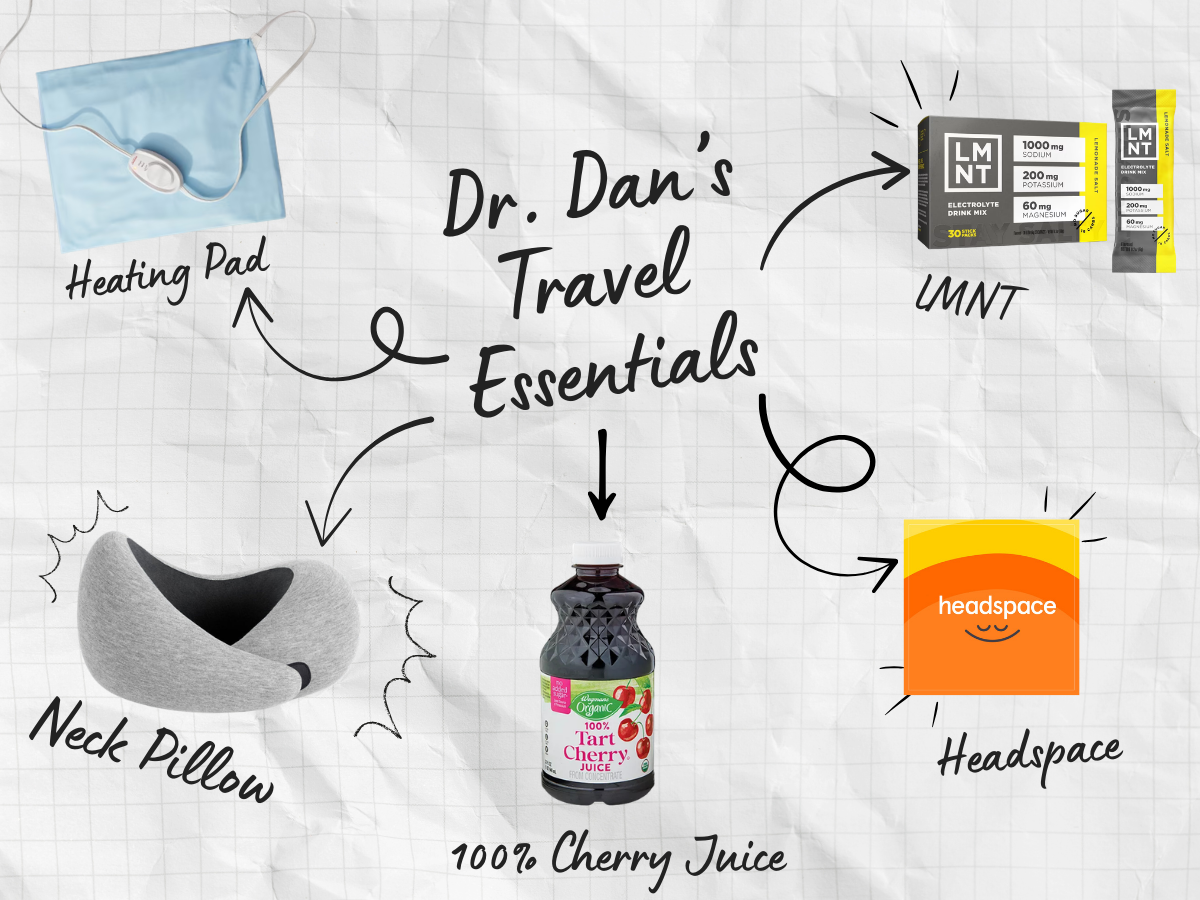
Travel—whether for holidays, work, or long road trips—can be surprisingly hard on the body. Sleep gets disrupted, hydration drops, routines disappear, and suddenly your back, neck, or energy levels are sending loud complaints.
As physical therapists in Durham, NC, we spend a lot of time helping people recover from travel-related stiffness, flare-ups, and fatigue. Over time, we’ve also learned how to prevent many of these issues with a few simple, science-backed tools.
Here are five travel essentials we swear by, grounded in evidence, clinical experience, and a whole lot of real-life testing (including 30+ hours in a car last week).
1. LMNT Electrolytes — Because Travel = Dehydration (Even in Cold Weather)
Most people associate dehydration with hot weather, but travel itself is dehydrating. Long drives, flights, inconsistent meals, alcohol, exercise, and dry cabin air all contribute.
Electrolytes like sodium, potassium, and magnesium play a role in:
- Muscle function
- Nerve signaling
- Sleep quality
- Exercise recovery
- Headache prevention
We love LMNT because it’s simple, effective, and easy to pack. We use it when traveling regardless of temperature—especially since we almost always work out on the road, either in a hotel gym or a local Planet Fitness.
Clinically, we also see electrolytes help with:
- Travel-related muscle cramping
- Poor sleep
- Post-exercise soreness
- “Holiday hangover” recovery
2. The Ostrichpillow Go Neck Pillow — Ridiculous but Worth It
👉 https://ostrichpillow.com/products/go-neck-pillow
This one feels extra at first — very Moira Rose of us — but after spending more than 30 hours in the car, we’re fully converted.
Sleeping upright in cars, trains, or planes places a huge load on the neck and upper back. Poor support often leads to stiffness, headaches, or neck pain that lingers for days.
This pillow supports the head without forcing the neck into an awkward position, which is key for reducing muscular strain. It’s absolutely a splurge, but for anyone who travels frequently—or struggles with neck pain—it can be a game changer.
3. 100% Tart Cherry Juice — A Sleep-Supporting Staple
There’s solid research supporting tart cherry juice for sleep quality and recovery, largely due to its effects on melatonin and inflammation.
Travel is notoriously hard on sleep, especially if you’re already a light sleeper. I recently grabbed tart cherry juice from a regular grocery store as soon as we arrived at my father-in-law’s, knowing sleep would be a challenge.
Benefits include:
- Improved sleep onset
- Reduced nighttime awakenings
- Support for muscle recovery
We recommend 100% juice (not cocktail blends), taken in the evening while traveling. https://cheribundi.com/ is also a route you could take - if it's good enough for the NCAA Volleyball Teams, it's good enough for me!
4. Headspace — Consistency for Your Nervous System
Travel isn’t just physically disruptive — it’s mentally noisy. Changing environments, packed schedules, and constant stimulation can make it hard to feel grounded.
One of the most overlooked aspects of physical therapy is nervous system regulation. Stress directly impacts pain perception, sleep, digestion, and recovery.
Headspace helps with:
- Breath awareness
- Stress reduction
- Sleep routines
- Creating consistency when everything else feels chaotic
I’m still learning how to let thoughts go and simply notice my breath, but even short sessions help me feel more regulated while bouncing around the Northeast for the holidays.
5. A Heating Pad — The Unsung Hero of Travel Recovery
If I can bring it, I always do.
My heating pad gets used for:
- Low back stiffness after long walks
- Abdominal discomfort after overeating or unfamiliar foods
- General muscle tension
It’s also frequently stolen by Christopher when his neck hurts after enduring questionable pillow situations.
Heat increases blood flow, promotes muscle relaxation, and can reduce pain sensitivity — all incredibly helpful during travel.
Honorable Mentions
Loop Earplugs
👉 https://us.loopearplugs.com/
Great for sensory overload, planes, shared sleeping spaces, or overstimulating family gatherings.
iPhone Built-In Sound Machine
If you don’t use Headspace, iPhones now offer background sounds like rain or dark noise, which can be incredibly helpful for sleep in unfamiliar environments.
Why Physical Therapists Care About This Stuff
Travel-related pain or fatigue is rarely caused by one thing. It’s usually multifactorial, involving:
- Sleep disruption
- Hydration changes
- Stress
- Increased or decreased activity
- Different beds, pillows, and seating
- Family systems and schedules
- Transportation demands
In physical therapy, especially here in Durham, NC, we don’t just look at joints and muscles — we look at the entire system influencing how your body feels.
These tools don’t replace movement or rehab, but they support the systems that allow your body to recover and adapt.
Final Takeaway
Travel doesn’t have to wreck your body or your routine. A few intentional, science-backed tools can make a huge difference in how you feel on the road — and how quickly you bounce back once you’re home.
If you’re noticing recurring pain, stiffness, or fatigue after travel, physical therapy can help you identify what’s driving it and build strategies that fit your real life.
And if nothing else — hydrate, support your neck, sleep when you can, and don’t underestimate the power of a good heating pad.
