
Soft Tissue Injury Recovery
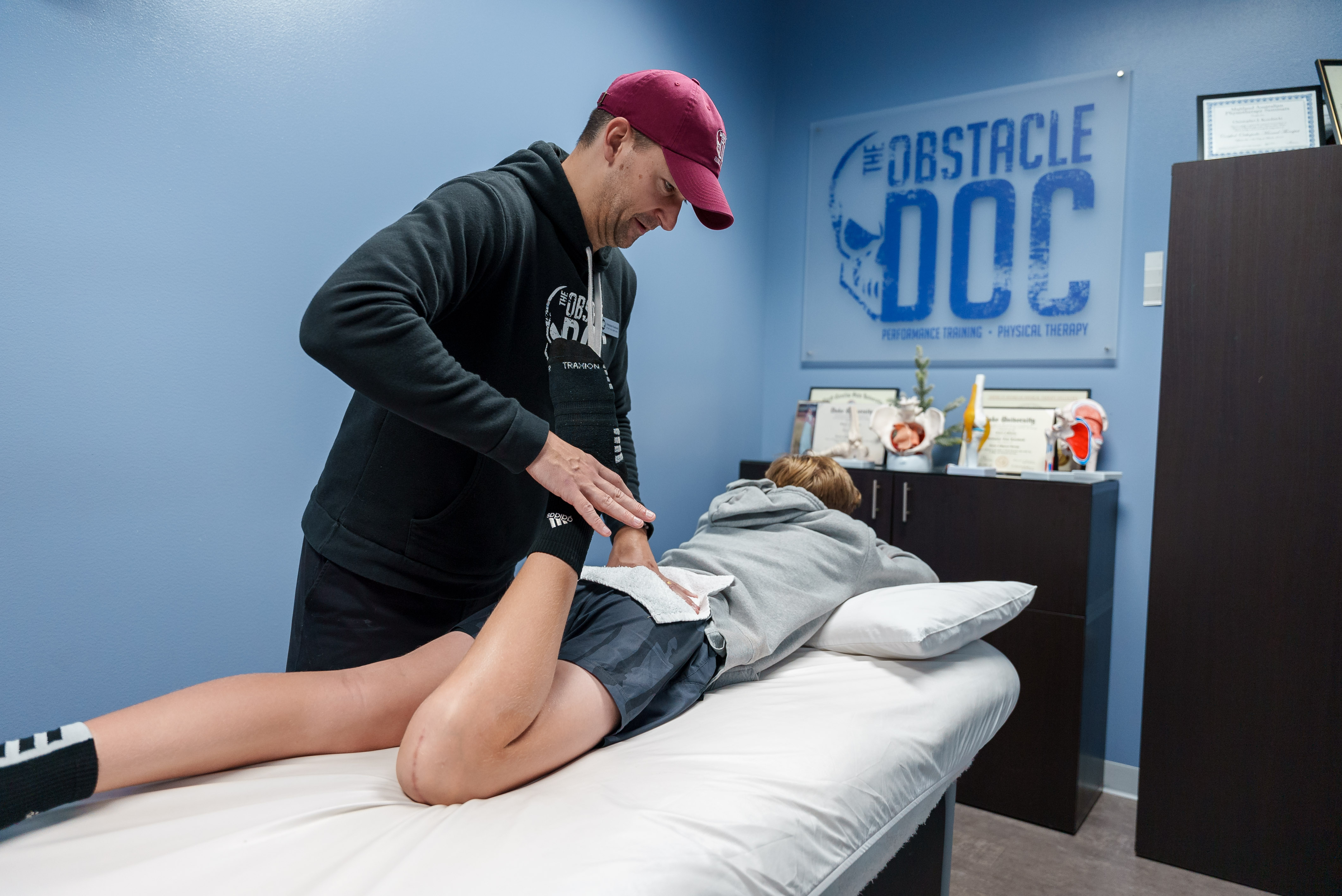
The way we treat and manage soft tissue injuries like muscle strains has changed over the years.
The management of acute soft tissue injuries has evolved substantially in recent years. Soft tissues within the body encompass muscles, tendons, ligaments, the tissues surrounding joints and bones, nerves, blood vessels, skin, and fat. These tissues are brilliant and adapt to the stressors we put on them throughout our daily lives. Yet, the chances that you have injured these tissues at some point in your life is pretty high.
Whether it is a papercut, blister, sprained ankle, or pulled hamstring our bodies undergo a multi-phase process to repair the injured tissue immediately after the injury occurs. While our bodies carry out these cellular processes, we, on a larger scale, attempt to manage the symptoms of injury with strategies long thought to speed up recovery.
You have likely heard or used these strategies in the past. They usually come as acronyms like RICE. It is long-standing, widely recognizable advice that is given by doctors or passed down by family members who had the same injury thirty years ago.
RICE comprises Rest, Ice, Compression, and Elevation. You may have also seen POLICE—Protect, Optimal Load, Ice, Compression, and Elevation. While some of their suggestions still hold up, these acronyms neglect injury management beyond the initial soft tissue injury, and certain recommendations may inhibit long-term tissue healing.
Modern healthcare is slowly shifting away from these acronyms that emphasize passive modalities and rest as treatments. Instead, it is opting to promote active strategies that see people with injuries return to activities faster and with greater biopsychosocial resiliency.
A newer, evidence-based approach to managing soft tissue injuries uses the acronym PEACE & LOVE to encompass care immediately following injury and ultimately management of the injury afterward. An editorial published in the British Journal of Sports Medicine (BJSM) in 2019 broke down this biphasic management strategy and provided a framework for injured individuals and clinicians to follow.
PEACE is utilized in the first few days following a soft tissue injury, while LOVE encourages restoration of normalcy and resiliency after the first days have passed. This culminates in the following:
P - Protect
When a soft tissue injury occurs, unload, restrict, or modify movements for a day or so to prevent bleeding or further tissue damage or aggravation. In this initial timeframe, the body has begun a series of chemical cascades to begin tissue healing. You may notice pain, swelling, warmth, and redness—which are all normal and should occur—as the body begins the inflammatory phase of tissue healing. This is where cells begin to stop bleeding, prevent infection, clean up cellular debris, and reestablish homeostasis.
It is important to note this is different from resting the injury. Rest, especially for prolonged periods, can become detrimental to tissue healing and begin to weaken tissue strength and quality. Therefore, instead of remaining in bed or lying on the couch and avoiding activities, try to remain active and let pain guide the level of participation in those activities.
E - Elevate
Elevating the injured area above heart level is thought to promote the movement of fluids out of the injured tissue. Elevation, in conjunction with the next two sections, may help limit excessive swelling and allow for continued tissue healing. There is limited evidence of elevation alone resolving swelling, but combining it may have better results.
A - Avoid Anti-Inflammatory Modalities
Contrary to popular belief, do not use over-the-counter anti-inflammatories like ibuprofen, acetaminophen, or paracetamol, and do not use ice.
Yes, you read that right. Do not use ice. Do not ice your soft tissue injury.
Inflammation needs to happen following injury. The chemicals released during the inflammatory phase are critical for initiating tissue healing processes. Using anti-inflammatories may negatively impact long-term tissue healing beyond the inflammatory phase—especially with higher doses or consistent use.
A similar result may occur from icing and cryotherapy though the mechanisms seem a bit different. Like elevation, there is not a robust evidence base to support the use of ice in treating soft tissue injuries. Yet, unlike elevation, there is risk associated with repeated and frequent icing. Delayed or reduced blood vessel formation and blood flow following injury may occur as well as reduced infection control from important cells and increased immature muscle fibers, ultimately resulting in weakened tissue repair and poor collagen synthesis.
My caveat to all of this–since I rarely see people within three days of an injury–is that ice and anti-inflammatories do help relieve pain. Beyond the initial days of an injury, if used sparingly or short courses, they can help to help minor aches and pains. NSAIDs will certainly help with swelling that exists beyond the tissue healing timelines. If it keeps you moving, then use it to your advantage.
C - Compress
Compressing injured soft tissue may limit excessive swelling and bruising. Additionally, combining compression with elevation appears to help resolve excessive swelling a little better than these items on their own. Again, the evidence base for this is also limited. However, in the clinic, this has shown to be beneficial for the patients I manage who are experiencing swelling at the end of a session.
E - Educate
Education is a huge part of injury management, hence this blog post. In the United States, patient education across the board in health care is dismal at best. Providers are hamstrung by short appointment times, the internet and social media are rife with misinformation, there is an ominous lack of access and time to read primary literature, as well as horrifyingly poor health literacy among the general population.
In the context of musculoskeletal injury, an active approach to recovery is always going to yield more benefits than passive interventions. Electrotherapies like TENS and NMES as well as manual therapies, massage, ultrasound, acupuncture, and most things the internet tries to sell have very limited effects on pain and function compared to early mobilization and tissue loading or a combination of manual therapies and loading.
L - Load
As the first few days after a soft tissue injury draw to a close, the cellular processes that occur shift from inflammatory to proliferative—decreasing the area of injured tissue and rebuilding healthy new tissue.
Mechanical stress via range of motion or strength exercises needs to be added as soon as it is tolerable. Finding optimal loads for injured tissue without provoking serious pain promotes the repair, remodeling, and tolerance of soft tissues through a process called mechanotransduction. This is defined as the ability of a cell to actively sense, integrate, and convert mechanical stimuli into biochemical signals that result in intracellular changes.
O - Optimism
I cannot stress enough how important having a good attitude and outlook on an injury can influence recovery. There have been studies done that show having a positive outlook on injury recovery improves one’s prognosis and outcome. Additionally, it dampens the negative impact of psychosocial factors like catastrophization, depression, and fear can have on recovery.
Additionally, there is the idea that belief and emotions can explain more about variations in symptoms than the actual anatomical or physiological elements of an injury.
Stay positive, things do get better.
V - Vascularization
The benefits of cardiovascular exercise are plentiful. In the context of recovery from soft tissue injury, cardio works to promote blood flow to injured tissues and can be a motivating force for those struggling to get moving early in recovery. Blood flow and movement can be a very powerful pain-relieving combination. Low-load, high-duration activities like riding stationary bikes, ergometers, and ellipticals can be a nice bridge between early, painful immobilization and pain-free activities.
E - Exercise
We should all be doing it and we should be doing more than we think we need to. Exercise is the definitive piece to drive home success with injury recovery and long-term injury risk reduction. This is, in my and my colleagues’ opinions, the foundation of physical therapy. It is the strongest tool for recovery and what rehab professionals have the most control over.
Significant pain should be avoided when exercising—that being pain greater than a 5 out of 10 on classic pain scales. Yet, experiencing some mild pains and discomfort is not cause for concern, especially if these pains improve with repetition.
How exercise is prescribed depends on several factors as well as your goals for recovery. These are unique to everyone, so to give a blanket recommendation may prove to be a bit reductive and not fully encompass someone’s presentation.
Consistent, progressively challenging exercise will continue to aid in healing as injured tissue moves into the final remodeling phase. The stressors and forces applied through exercise will reinforce adaptability and tolerance to any direction of movement you come up against.
