
Understanding Tissue Healing Timelines: What Injury Recovery Really Looks Like
.jpeg)
Injuries happen — whether during workouts, sports, or everyday life. But one of the biggest reasons injuries linger or keep coming back isn’t bad luck… it’s misunderstanding how tissue healing actually works.
As physical therapists in Durham, NC, we see this all the time:
- People expecting pain to disappear in days
- Others pushing too hard too soon
- Chronic injuries that never fully heal
Understanding how your body heals tissue — and how long each phase truly takes — can completely change recovery outcomes.
Let’s break it down. You can watch the video here!
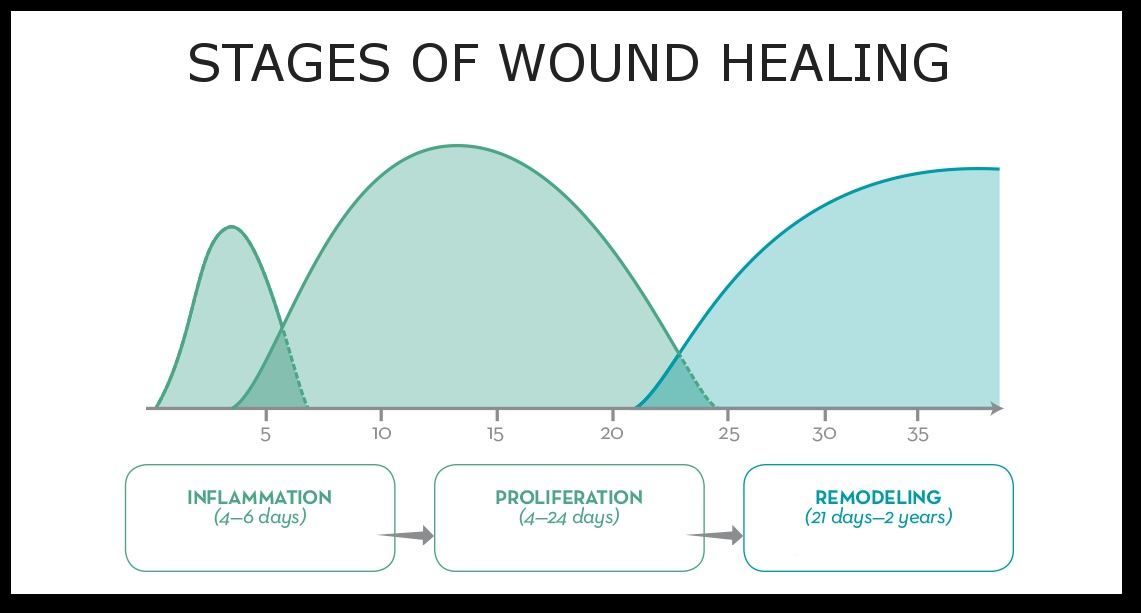
Phase 1: Inflammation — The Start of Healing (0–72 Hours)
Inflammation gets a bad reputation, but it’s essential.
Right after an injury, your body enters the inflammatory phase, which typically lasts from the moment of injury up to about 72 hours.
During this phase:
- Chemical signals are released
- Damaged tissue is cleared away
- Pain signals increase (by design)
- Healing cells are recruited to the area
This is your body’s cleanup and communication phase. Without it, healing can’t progress.
Why this matters
Trying to completely eliminate inflammation too early — or ignoring it and pushing through pain — can disrupt the healing cascade before it even gets started.
Phase 2: Proliferation — Building New Tissue (Days to Weeks)
After inflammation settles, the body transitions into the proliferation phase. This stage can last several days to multiple weeks, depending on the tissue and severity of injury.
During proliferation:
- New cells are formed
- Blood vessels develop
- Early tissue repair begins
This phase is critical for injuries like:
- Tendon irritation or tendonitis
- Muscle strains
- Ligament injuries
For example, with tendon-related pain, it’s realistic for meaningful healing to take 2–4 weeks or longer — especially if the tendon continues to be overloaded.
Why this matters
Pain may start to improve before tissue is fully ready for load. Returning to activity too quickly can stall progress or restart the cycle.
Phase 3: Remodeling & Maturation — Getting Strong Again (Weeks to Months)
The final phase of healing is remodeling, where tissue matures and adapts to stress.
This is where:
- Tissue strength improves
- Elasticity is restored
- Load tolerance increases
A helpful analogy is a scab after a cut. The scab protects healing tissue, then falls off once the skin underneath is ready to handle normal stress again.
Tendons, ligaments, and muscles work the same way — but only if they’re loaded appropriately during rehab.
Why this matters
Skipping this phase or under-loading tissue leads to:
- Recurrent injuries
- Chronic pain
- “It never fully healed” situations
Acute vs. Chronic Injuries: Why Timelines Change
Not all injuries heal on the same schedule.
Acute injuries
- Clear injury event
- Predictable healing phases
- Respond well to structured rehab
Chronic injuries
- Often no clear starting point
- Healing process may be stalled
- Frequently involve repeated micro-trauma
Conditions like chronic tendon pain (tennis elbow, Achilles pain) often aren’t stuck in inflammation — they’re stuck because the tissue never rebuilt properly.
This is where individualized physical therapy matters most.
Why Re-Injuries Keep Happening
Repeated injuries — like recurring ankle sprains — are a red flag.
Each recurrence may indicate:
- Incomplete healing
- Poor tissue strength
- Lack of proper loading
- Unaddressed movement deficits
Respecting the severity of the original injury and matching rehab to real-life demands is essential to breaking the cycle.
How Physical Therapy Supports Proper Healing
At our Durham physical therapy clinic, we focus on:
- Matching rehab to the correct healing phase
- Gradually restoring strength and elasticity
- Loading tissue at the right time — not too early, not too late
- Preventing reinjury through targeted movement strategies
Healing isn’t just about time — it’s about the right stimulus at the right stage.
Key Takeaways
- Inflammation is necessary, not the enemy
- Tissue healing happens in phases — and each phase matters
- Pain relief doesn’t always mean tissue readiness
- Chronic injuries need different strategies than acute ones
- Proper rehabilitation improves long-term outcomes
When healing is respected and guided correctly, people don’t just recover — they come back stronger and more resilient.
